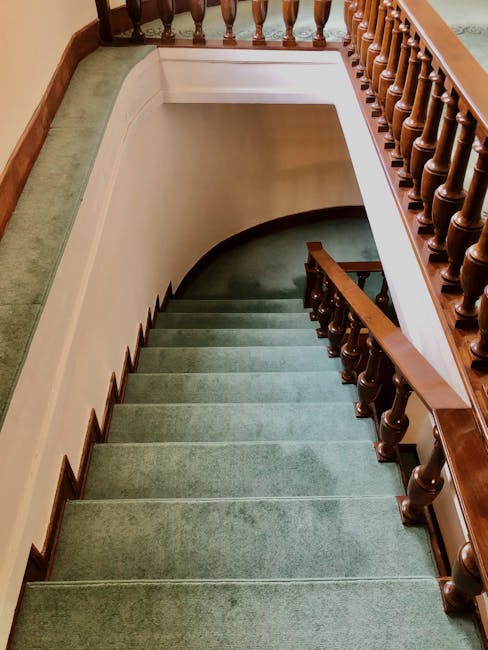
Staircase too narrow? Moving sofas in Merton Park flats
If you live in a Merton Park flat, you already know the problem: the sofa looked perfectly sensible in the shop, but the staircase at home feels like it was designed for a ladder, not a three-seater. That awkward moment when the sofa is halfway in the doorway and everyone goes quiet? Yes, that one. This guide to Staircase too narrow? Moving sofas in Merton Park flats explains what to do, what to avoid, and how to make the move feel calm rather than chaotic.
Whether you are replacing a tired two-seater, moving house, or trying to get a bulky corner sofa up a narrow communal stairwell, the same basic questions come up: will it fit, is it safe, and what is the least stressful way to do it? Let's walk through the practical side properly, with a few local realities in mind.
Table of Contents
- Why Staircase too narrow? Moving sofas in Merton Park flats Matters
- How Staircase too narrow? Moving sofas in Merton Park flats Works
- Key Benefits and Practical Advantages
- Who This Is For and When It Makes Sense
- Step-by-Step Guidance
- Expert Tips for Better Results
- Common Mistakes to Avoid
- Tools, Resources and Recommendations
- Law, Compliance, Standards, or Best Practice
- Options, Methods, or Comparison Table
- Case Study or Real-World Example
- Practical Checklist
- Conclusion
- Frequently Asked Questions
Why Staircase too narrow? Moving sofas in Merton Park flats Matters
Narrow staircases are not just inconvenient. They can turn a simple furniture move into a problem that affects the sofa, the walls, the banister, and your back. In many flats, especially older conversions and compact layouts, the issue is not the front door alone. It is the bend in the stairs, the angle of the landing, the height of the ceiling, or that irritating little light fitting right where you need room to pivot.
In Merton Park, that matters because flats are often lived-in, well-kept, and close-packed in layout. One misjudged turn can mark paintwork, chip a skirting board, or leave a sofa stuck in a position that seems to mock everyone involved. To be fair, most sofas are fine in wide hallways. It is the stairwell that exposes the truth.
There is also the social side of it. If you are in a shared building, you may need to think about neighbours, hallway access, and keeping the common areas clear. Nobody wants a large sofa wedged in the stairwell while someone is trying to get to work. So the issue is bigger than "will it fit?" It is about doing the move safely, politely, and without expensive damage.
Expert summary: The best sofa move is the one you plan before anyone starts carrying. Measure first, protect surfaces second, and only then decide whether the sofa should go up as-is, be partially dismantled, or use a different access route.
How Staircase too narrow? Moving sofas in Merton Park flats Works
The basic process is simple enough: measure the access route, compare it to the sofa dimensions, and choose the safest method. The hard part is that "access route" means more than the staircase width. It includes every turn, landing, doorway, corridor, and ceiling pinch point between the pavement and the room where the sofa is meant to end up.
In practice, movers usually work through the route in sections. First, they check the sofa size in all directions: length, depth, height, and diagonal measurements. Then they assess the building access. A straight staircase can be manageable even if it looks tight. A staircase with a half-landing or sharp turn is often where the trouble starts. One small lip on a doorway threshold can make the angle awkward, and suddenly the whole thing needs a rethink.
If the sofa is modular, removable, or can be split into sections, the job becomes far easier. If it is a fixed-frame sofa with large arms or a rigid base, you may need a more careful carrying technique, extra padding, or a different route altogether. Sometimes the answer is simply not to force it. Honestly, that is a very good answer.
There is also the practical matter of people power. A two-person carry might be enough for a light loveseat, but larger sofas can need more hands, more control, and better coordination. Short, calm instructions help. So does moving slowly. You want one controlled lift, not four panicked adjustments and a scraped wall.
Key Benefits and Practical Advantages
Handling a narrow-staircase sofa move properly saves more than time. It reduces stress, protects the flat, and lowers the chance of costly damage. The difference between a planned move and a rushed one is usually obvious within minutes.
Here are the main benefits:
- Less damage to the property: careful measuring and padding reduce scuffs on walls, bannisters, and doors.
- Lower risk of injury: good lifting technique and route planning protect backs, hands, and fingers.
- Better chance of success on the first attempt: no one enjoys "let's take it back down and try again."
- Faster move overall: yes, planning takes time, but it saves a lot more later.
- Less disruption for neighbours: a tidy, efficient move is simply easier for everyone in the building.
There is another benefit that people overlook: confidence. Once you know the sofa can make the turn, the whole job stops feeling like a gamble. That matters in flats, where one uncertain move can make the stairwell feel much smaller than it really is.
Who This Is For and When It Makes Sense
This topic is relevant if you are:
- moving into or out of a flat in Merton Park
- replacing an old sofa with a larger one
- dealing with a top-floor flat and tight internal stairs
- updating a furnished rental and need to swap bulky furniture
- trying to avoid damage in a period conversion or compact apartment block
It also makes sense if you are still shopping for a sofa and want to avoid a very annoying mistake. Let's face it: a sofa can look elegant online and turn into an access problem the moment it arrives. If you live in a flat with awkward stairs, access should be part of the buying decision, not an afterthought.
This is especially useful for landlords, tenants, homeowners, and people helping parents or relatives move in. Different people need different levels of support, but the underlying issue is the same: the staircase is narrow, and the sofa is not getting smaller.
Step-by-Step Guidance
Here is a practical way to tackle it without overcomplicating the job.
1. Measure the sofa properly
Measure the full width, depth, and height of the sofa. Do not forget armrests, feet, and any fixed cushions or protruding frames. If the sofa can be carried on its side, also note its diagonal size, because that often determines whether it can tilt through the stairwell.
2. Measure the route, not just the stairs
Check the hallway, each stair width, landing depth, ceiling height, and doorway clearance. A staircase can be "wide enough" on paper but still fail at the landing turn. That is the sneaky bit.
3. Look for removable parts
Feet, arms, back cushions, and detachable sections can make a huge difference. If the manufacturer guidance allows it, remove anything that makes the sofa bulkier than it needs to be. Keep screws and fittings in a labelled bag. Tiny bag, massive relief later.
4. Protect the building
Use blankets, corner protectors, floor coverings, or similar padding where the sofa may brush against paintwork or wood. In communal areas, protection is even more useful because the route may be shared and less forgiving.
5. Plan the lift and the turning point
Talk through who is leading, who is steering, and where the sofa will pivot. If you are moving a sofa up stairs, the most difficult moment is often the bend. Slow communication matters more than brute strength.
6. Test the angle before committing
If the sofa is close to fitting, try a careful test position before the final lift. Sometimes a small tilt is enough. Sometimes it is obvious that forcing it would be a bad idea. Trust your eyes. They are usually right here.
7. Decide whether to continue or stop
If the sofa is scraping, twisting badly, or requiring too much force, stop. Forcing a fit through a narrow staircase is how damage happens. At that point, a different approach is usually the safer move.
Expert Tips for Better Results
From experience, the smoother moves are the ones where someone has quietly done the boring jobs first. The measurable stuff. The tape measure. The route check. The "where does this actually pivot?" conversation. That is where success starts.
Here are a few tips that genuinely help:
- Measure at the tightest point, not the easiest one. The narrowest part of the stairwell is the one that matters.
- Use a second person to guide, not just lift. One person can steer while another manages balance. That split is often the difference between calm and chaos.
- Keep the floor clear. Shoes, bags, and plant pots are the sort of things that seem harmless until somebody trips.
- Use gloves with grip if the fabric is slippery. Velvet, leather, and faux leather can slide more than you expect.
- Take a five-second pause before each turn. It sounds almost too simple, but it helps people reset their grip and check the angle.
If you are dealing with a flat in a quiet Merton Park street, timing can help too. A mid-morning move is often easier than a busy evening slot. Fewer people in the hallway. Less rushing. Less noise. Small things, but they add up.
One more thing: if the sofa is expensive or delicate, do not rely on optimism. Optimism is lovely for holidays, not so much for tight staircases.
Common Mistakes to Avoid
Most sofa-moving problems are predictable. That is the frustrating part. The same mistakes come up over and over again, and nearly all of them are avoidable.
- Measuring only the sofa, not the route. The stairwell is usually the real problem.
- Ignoring armrests and feet. Those little extras often create the final obstruction.
- Forgetting the landing turn. A narrow landing can be more difficult than the stairs themselves.
- Trying to force the sofa through. If it needs violence, it is probably the wrong approach.
- Not protecting communal areas. Even a small scuff can become a much bigger annoyance.
- Underestimating the weight distribution. Some sofas are awkward rather than heavy, which is its own special brand of pain.
- Moving too quickly. Speed makes sense in theory, then reality arrives with a wall corner.
Another mistake is assuming every sofa can be taken apart. Some can. Some very much cannot. Check the manufacturer notes before you begin or you may end up trying to unbuild something that was never meant to be unbuilt.
Tools, Resources and Recommendations
You do not need a van full of specialist gear for every move, but a few basic items can make a big difference. The exact mix depends on the sofa and the building, yet these are the most useful tools in real life:
| Item | Why it helps | Best used for |
|---|---|---|
| Measuring tape | Checks sofa and route dimensions accurately | Planning before the move |
| Moving blankets | Protects walls, doors, and the sofa finish | Shared stairwells and tight turns |
| Grip gloves | Improves hold and control | Fabric, leather, or slippery frames |
| Furniture sliders | Makes short internal repositioning easier | Flat entrances and room adjustments |
| Protective floor covering | Reduces scuffs on floors and hallways | Communal access routes |
If you want to understand the company side of things before booking anything, it can also help to read the site's about us page for background and the health and safety policy for how careful handling and site safety are approached. For reassurance around belongings, the insurance and safety information is worth a look as well.
And if you are comparing options or want to plan ahead, check the pricing and quotes page. A clear price conversation is always better than a vague one. No one enjoys surprises, especially not with furniture moves.
Law, Compliance, Standards, or Best Practice
For sofa moves in flats, the main concerns are usually safety, access, and responsibility rather than a single special law about furniture and staircases. That said, good practice still matters. In a shared building, you should avoid blocking fire escapes, damaging communal areas, or creating unsafe conditions for residents and visitors.
If you are renting, it is wise to check your tenancy terms before moving bulky items through common parts. Leaseholders may also need to consider building rules, especially where access to hallways or shared stairwells is involved. The exact details will vary, so careful reading is better than guessing. A bit dull, yes. Still worth it.
Health and safety best practice is straightforward:
- do not overstrain yourself or your helpers
- keep the route clear
- use enough people for the weight and shape of the sofa
- protect walls, floors, and door frames
- stop if the movement becomes unstable
If you are booking a professional service, it is sensible to review the provider's terms and conditions and privacy policy, especially if you are sharing contact details, access instructions, or delivery preferences. For payments, the payment and security information gives another useful layer of reassurance.
Options, Methods, or Comparison Table
Not every narrow-staircase move needs the same approach. The best method depends on sofa design, stair shape, and how much risk you are willing to take. Here is a simple comparison.
| Method | Best for | Pros | Watch out for |
|---|---|---|---|
| Carry as one piece | Compact sofas with straightforward access | Fast, simple, minimal prep | Can fail quickly if the landing is tight |
| Remove feet or parts | Sofas with detachable elements | Improves clearance without full dismantling | Need to keep fittings safe and organised |
| Sectional move | Modular or split sofas | Usually easier on narrow stairs | Requires careful reassembly later |
| Professional handling | Large, awkward, or high-value items | More control, less guesswork | Costs more than doing it yourself |
For many Merton Park flats, the difference between success and failure is not strength. It is the route and the shape of the sofa. That is why the most sensible option is often the least dramatic one.
Case Study or Real-World Example
A fairly typical scenario: a couple moving into a first-floor flat in Merton Park with a narrow internal staircase and a right-angle turn on the landing. Their sofa was a large two-piece corner model, bought with the best intentions and not enough measuring. Classic, really.
On arrival, it was clear the sofa would not take the landing in one piece. Rather than forcing it, they removed the feet, checked whether the back cushions could be detached, and used blankets to protect the painted walls. One person guided from below while another controlled the top section. They paused at the bend, adjusted the angle by a few inches, and moved it in slowly. No damage. No shouting. Everyone looked a bit relieved, which is usually a good sign.
What made that move successful was not cleverness, just discipline: measure, assess, adapt, and stop before the problem becomes bigger. That is the pattern, more or less, every time.
Practical Checklist
Use this quick checklist before moving a sofa into a flat with a narrow staircase:
- Measure the sofa in full, including arms and feet
- Measure the narrowest part of the route
- Check stair turns, landings, and doorway heights
- Confirm whether any sofa parts can be removed
- Clear the hallway and stairs of loose items
- Protect walls, floors, and banisters
- Choose enough helpers for the size of the sofa
- Agree on who leads and who guides
- Move slowly and pause before turns
- Stop if the sofa starts scraping or twisting badly
Quick practical takeaway: if the sofa barely fits on paper, assume the real-world move will be harder. That little bit of caution saves a lot of trouble.
Conclusion
Narrow staircases in Merton Park flats do not automatically mean a sofa move will fail. They do, however, mean you need a better plan than "we'll just try it and see." Measure the route carefully, think about the turns, protect the building, and decide early whether the sofa should be moved whole, partly dismantled, or handled another way.
Most of the stress disappears once the problem is treated as a planning job rather than a lifting contest. That is the real shift. With the right preparation, even an awkward move becomes manageable, and sometimes that small victory feels bigger than it should. Which, to be fair, is fine.
If you want help working out the best approach for your own flat, get in touch and compare your options before moving day rolls around. A calm plan today is a much nicer thing than a stuck sofa tomorrow.
Get a free quote today and see how much you can save.
Frequently Asked Questions
How do I know if a sofa will fit up a narrow staircase?
Measure the sofa's full dimensions and compare them to the narrowest points in the staircase, including landings and turns. If the sofa is close to the limit, assume the move will be trickier than the measurements suggest.
What is the most common reason a sofa gets stuck in a flat stairwell?
Usually it is not the straight width of the stairs. It is the landing turn, ceiling height, or the sofa arms catching at an awkward angle. That is the bit people often forget to check.
Can I remove the feet from my sofa to make it fit?
Sometimes, yes. Many sofas have removable feet or detachable sections. Check the manufacturer guidance first and keep all screws and fittings together so reassembly is straightforward later.
Is it better to move a sofa upright or on its side?
It depends on the sofa shape and the staircase. Some sofas are easier on their side, while others need to be angled upright to clear a landing. There is no one-size-fits-all answer here.
Do I need professional help for moving a sofa in a Merton Park flat?
Not always. Smaller sofas may be manageable with a careful DIY approach. But if the staircase is especially tight, the sofa is large, or the route includes awkward bends, professional help can save time and reduce damage risk.
How can I protect the walls and banister during the move?
Use moving blankets, corner protection, and clear communication between the people carrying the sofa. Slow, controlled movement is better than trying to rush through the stairwell.
What should I do if the sofa starts scraping the wall?
Stop immediately and reset the angle. Scraping usually means the sofa is too wide, the turn is wrong, or the route needs padding. Forcing it will usually make the damage worse.
Are modular sofas easier to move in flats with narrow stairs?
Yes, often they are. Modular and sectional sofas are usually easier because they can be split into smaller parts, which makes tight staircases much more manageable.
What documents or policies should I check before booking help?
It is sensible to review the provider's terms, payment details, and safety information. If you want a better sense of the business and how it handles customer care, the about page and safety-related pages are useful too.
How do I avoid upsetting neighbours during the move?
Keep the hallway clear, avoid blocking entrances, and try to move at a sensible time. A neat, efficient move tends to cause far less disruption than a slow, repeated one.
What if the sofa simply will not fit?
Then the best option is to stop and look at alternatives, such as removing more parts, choosing a different access route, or selecting a better-suited sofa. Sometimes the smartest move is to change the plan, not keep pushing.
Can I use this advice when moving other bulky furniture too?
Absolutely. The same principles apply to wardrobes, mattresses, armchairs, and dining tables: measure carefully, protect the route, and decide early whether the item needs to be split, carried differently, or handled with extra help.